
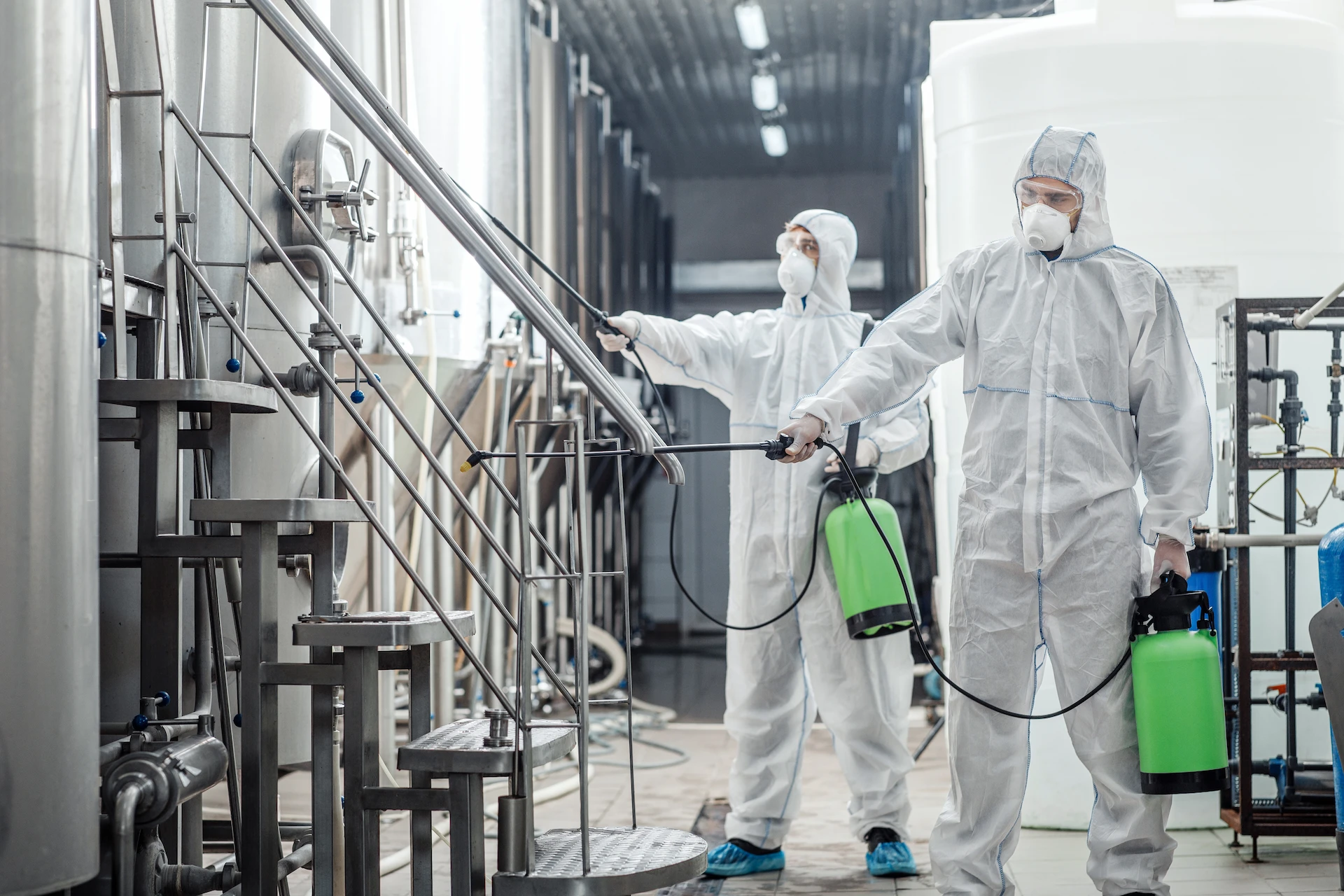
Quat sanitizer ppm is set by the label on the container, not by the bucket your crew inherited. On food contact surfaces you mix to the concentration the product's EPA-registered label states, keep the surface wet for the contact time it states, and prove the number with a test strip instead of reading the color of the water.
That sounds simple on paper. On a line at 2 p.m., with towels soaking, soil carrying in and one person topping the bucket off with hot water, the number moves. This is how to set the target, how to check it, and what pulls it out of range during a shift.
What the number depends on
Whatever its label says for the job you are doing. The Food Code does not hand you one quat number the way it does for chlorine or iodine. It requires that a chemical sanitizer meet the sanitizer criteria and be used in accordance with the EPA-registered label use instructions, in water no harder than that label allows.
Above the label sits a federal ceiling. EPA's tolerance exemption for food-contact surface sanitizing solutions limits end-use strength, and for listed quat compounds the end-use concentration of all quaternary chemicals in solution is not to exceed 400 ppm of active quaternary compound. Stronger is not better. It is outside the exemption, it costs more per bucket, and it leaves residue your crew then has to deal with.
Most labels carry more than one. There is a sanitizing use dilution with a short contact time, and a disinfecting use dilution with a longer one. Same container, two jobs, two mixes. Train to the number for the task, not to the product name.
Chemistry matters as much as the number on the strip. IRC's K-Quat 4 product page states that its blend of four quaternary ammonium chlorides provides broad-spectrum kill six times greater at 150 ppm than a single chain quat at 200 ppm, and twice that of a dual chain quat at 200 ppm. Quat is also not the only option the Food Code allows: FDA has clarified that food contact surface sanitizers are not limited to chlorine, iodine and quaternary ammonium compounds.
With quat test strips, at the bucket, on a schedule, written down. Strips are cheap. A failed inspection, a reswab or a rework of a prep table is not.
Do not chase a low reading with more concentrate
A bucket that tests low is usually loaded with soil, not short of chemical, and adding concentrate to dirty water pushes you toward the EPA ceiling without restoring the kill. Dump it, rinse the bucket, and remake it at the label dilution.
Keep the strips usable. Check the date on the bottle, keep the cap closed, and store them away from the wet end of the sink. A strip that has been sitting open next to a steaming three-compartment sink is not proof of anything.
Because everything that happens to a bucket during service works against the number you mixed at open.
Set a retest interval that matches the station. A dish area bucket and a cold prep table bucket do not drift at the same rate, so one blanket rule for the building usually means one of them is wrong.
Quat and water hardness do not get along. The Food Code limits quat solutions to water with 500 mg/L hardness or less, or to the hardness the label specifies, whichever is tighter. If your building draws hard well water, the strip reading at the bucket is the number that counts, not the one on the dilution chart.
Two practical moves. First, test with your own water before you standardize on a product across sites, because what works in one town may read low in the next. Second, look at what the rest of your food service cleaning program is doing in that same water: hardness that drags a sanitizer down is also costing you on the detergent side.
Sanitizing reduces pathogens to a safe level for food contact use. Disinfecting is the higher bar, against the organisms named on the label, usually at a stronger dilution and a longer dwell. The same product can do both, and the label, not the nickname on the bucket, tells you which one you are doing. Our post on cleaner vs degreaser vs disinfectant walks through where each category belongs in a workflow.
One rule holds either way: sanitizer is not a cleaner. Soil blocks contact, so the surface gets cleaned and rinsed first, then sanitized. Where chlorine chemistry suits the application better, K-San Plus is IRC's EPA registered liquid chlorine sanitizer for dairy, food and beverage equipment.
If the right ppm depends on a busy person measuring correctly at the start of every shift, it will be wrong some of the time. That is what dispensing is for. A closed-loop dispenser pulls concentrate from the container and mixes it at a set ratio, so the bucket starts at the label number whoever fills it. Our guide to dilution control systems covers how that plays out in chemical cost and waste.
Strips then stop being a hunt for problems and start being a check that the system is holding.
An on-site demo puts the product in your sinks, on your surfaces and in your water, with a strip in hand so you can see where the solution lands. Online consultations work too if your sites are spread out.
The concentration printed on that product's EPA-registered label for the job you are doing. Quat labels normally list one dilution and contact time for sanitizing and a stronger one for disinfecting, and for food contact use EPA caps the end-use concentration of all quaternary chemicals in solution at up to 400 ppm of active quat for listed compounds.
A sanitizer built on quaternary ammonium chlorides, used on hard, non-porous surfaces and food contact surfaces at the label dilution. IRC's K-Quat 4 is a concentrated quaternary sanitizer for sanitizing, disinfecting and deodorizing all types of hard surfaces.
Whenever the strip reads below the label range, whenever the solution is visibly soiled, and at every shift change as a baseline. Busy stations with heavy grease or protein load need testing more often than that, not less.
Follow the label. EPA's food-contact exemption covers sanitizing solutions applied to food contact surfaces with adequate draining before contact with food, and the label states whether a potable rinse is required for your use.
Soil load and water are the usual answers. Food soil consumes active quat during the shift, and hard water fill makes the same dilution read weaker than it did at the last site you worked in.
Keep reading
Sources