
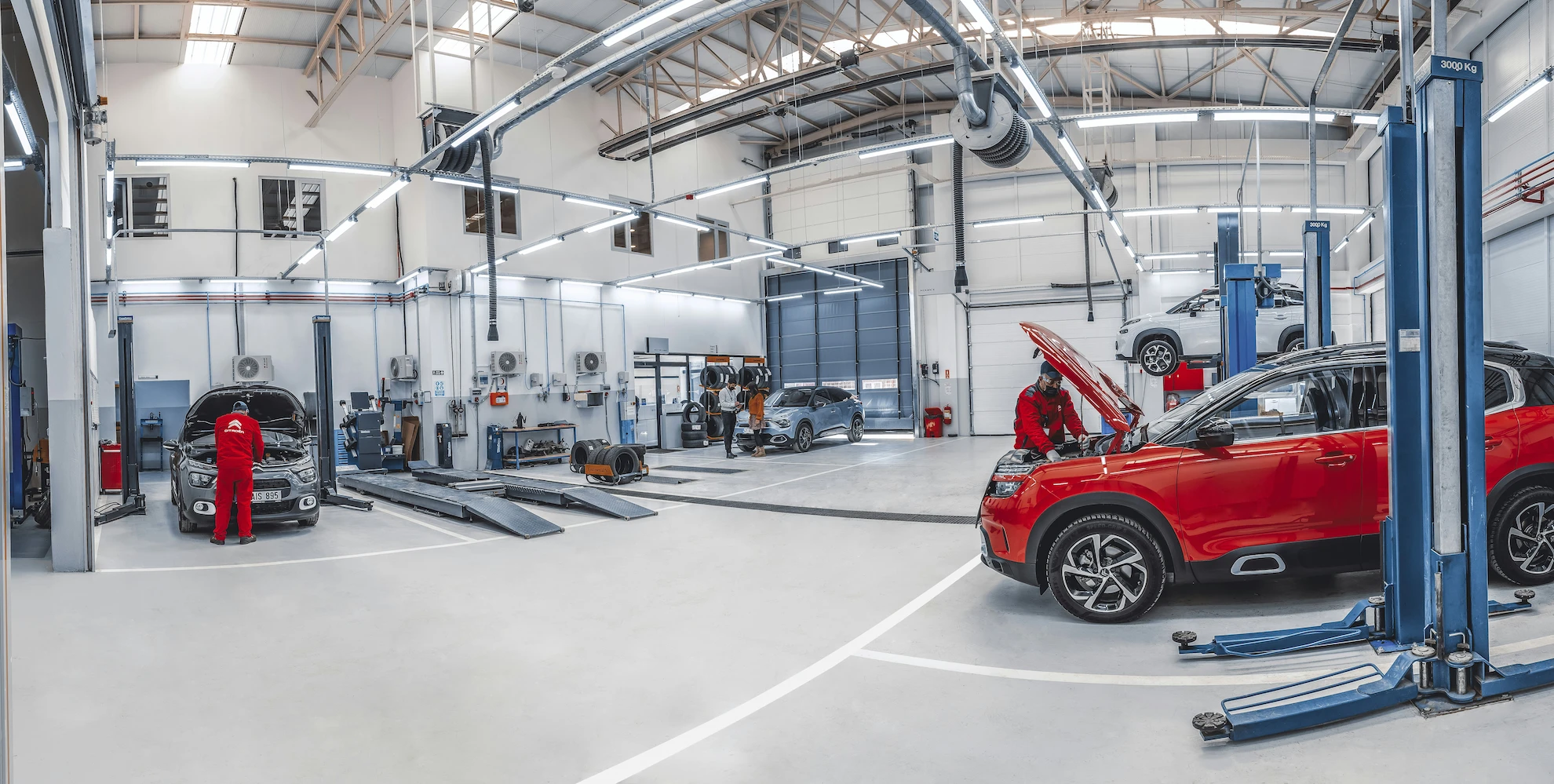
A strong automotive shop floor degreaser has to do more than cut visible oil. In a working service center, the real challenge is mixed contamination: grease around service lanes, road film at entry points, tire marks in high-traffic areas, and residue that keeps getting redistributed by foot traffic, carts, and vehicles.
IRC’s automotive page positions its degreasing solutions around exactly those problems—heavy oils, grease, road grime, floor safety, and lower chemical waste. Products such as Power 7, Stealth, Stealth Plus, Optima, Optima Prime, and HydroFoamer give shop managers several ways to tailor cleaning by soil load, water conditions, and application method.
This guide breaks down what actually matters when choosing a vehicle service center cleaner, how to think about daily versus heavy-duty degreasing, and where IRC’s products fit when the goal is faster cleaning with better floor safety and lower waste.
In most service centers, the floor is not dealing with one kind of soil. Service bays may have oil drips, grease, and fluid residue. Customer-vehicle areas may have road film, water, salt, and dirt. Entry lanes and turning points often hold rubber marks and heavier traffic patterns. By the end of the day, those soils have been spread from one zone to another.
That mixed-soil environment is exactly why automotive floor care should be more deliberate than a one-product-for-everything approach. The best results usually come from matching the chemistry, the dilution, and the application method to the dirtiest zones while still maintaining a simple routine the crew can actually repeat.
The first job is obvious: it has to cut oil and grease. But that is only part of the decision. In practice, the best auto shop floor cleaner also needs to rinse well, avoid leaving a slippery residue behind, perform across changing water conditions, and fit the way the team actually cleans—whether that means manual scrubbing, hose-and-foam application, or filling auto scrubbers.
The more a product checks all of those boxes, the less rework a facility usually sees.
It is easy to assume the best degreaser is simply the hottest one on the shelf. In reality, overpowered chemistry can create its own problems if it is used without regard to the floor type, dilution, or the way the shop operates. The target should be effective soil removal with controlled use—not chemical excess.
IRC’s product lineup is useful here because it offers multiple performance profiles instead of forcing every shop into one solution. That makes it easier to choose based on the job rather than defaulting to the same chemistry for light daily cleaning and heavy restorative degreasing.
Most automotive facilities need both a daily maintenance cleaner and a more aggressive response for heavily soiled zones. Trying to do everything with one setting usually leads to one of two outcomes: the team under-cleans the worst areas, or it overspends by using a heavier chemistry everywhere.
When facilities separate those use cases, floor appearance and floor safety usually improve at the same time.
IRC’s automotive service center page points buyers toward a practical set of floor-cleaning and degreasing tools. Each one speaks to a slightly different need inside the shop.
Power 7 is positioned as a heavy-duty degreaser for many soil types. IRC describes it as highly dilutable, free rinsing, non-dulling for even finished floors, effective under hard water conditions, and safe for all surface substrates. That makes it a strong candidate when the shop needs one flexible cleaner for a range of floor and hard-surface cleaning tasks.
Stealth is described by IRC as a highly alkaline, super-concentrated, water-based industrial degreaser and emulsifier with advanced surfactants and chelating agents. For shops fighting more stubborn oily contamination, that profile can make sense where stronger soil penetration is needed.
Stealth Plus is also positioned around hard-surface cleaning and water-hardness control while reducing handling and chemical usage. For facilities with tougher cleaning conditions or persistent performance issues tied to soil load and water quality, that can be a useful direction to evaluate.
Optima gives shops another option when the priority is strong hard-surface performance with a safer profile. IRC describes Optima as NSF-rated, HMIS 0-0-0, super-concentrated, and designed to perform even under hard water conditions. That makes it especially relevant for facilities trying to tighten safety messaging without giving up cleaning power.
Optima Prime becomes important when soft metals or aluminum-safe considerations enter the picture. IRC describes it as a controlled alkaline product that is safe for soft metals and particularly aluminum safe by design. Shops cleaning around sensitive surfaces or mixed equipment zones should keep that distinction in mind.
Even the right product can underperform when it is applied poorly. Automotive shops usually see better results when chemistry is delivered to the soil in a controlled, repeatable way instead of being over-poured or guessed at by feel.
That is where dispensing and foaming tools become more than convenience items. IRC’s HydroFoamer is positioned as a simple dispenser for spray, scrub, and rinse workflows and is specifically identified for automotive bays. In real shop conditions, that can help crews coat vertical and hard-to-reach areas more evenly while using less guesswork.
The best place to start is not the product label—it is the floor itself. Look at the dirtiest zones, how often they soil over, and what the crew currently does to get them clean. Then choose chemistry that solves those conditions with the least unnecessary complexity.
Most recurring floor problems come back to one of those issues. The solution is usually a better combination of chemistry, method, and routine—not simply more product.
The best choice depends on the soil load, floor type, water conditions, and how the shop applies the product. IRC’s lineup gives several options, including Power 7, Stealth, Stealth Plus, Optima, and Optima Prime, so the decision can be matched to the environment.
Yes—if it leaves residue behind or if the process uses more chemistry than the floor can recover cleanly. Rinse quality and application control matter just as much as cleaning strength.
A foaming applicator is useful when visible coverage, cling time, and controlled spray application help the team clean more efficiently, especially in bays and other hard-working zones.
Yes. IRC positions Optima Prime as safe for soft metals and particularly aluminum safe by design.
What actually works on automotive floors is not a mystery. The right degreaser needs to attack the real soil mix in the shop, rinse well, support safer traction, and fit the way the crew cleans every day. When those pieces line up, shops usually see cleaner floors, less waste, and fewer recurring trouble spots.
If your current program is leaving behind oily residue, inconsistent results, or too much chemical spend, IRC can help evaluate the floor conditions, recommend the right chemistry, and build a more repeatable automotive cleaning routine. The selection criteria behind that choice are covered in how to choose the right industrial degreaser.