
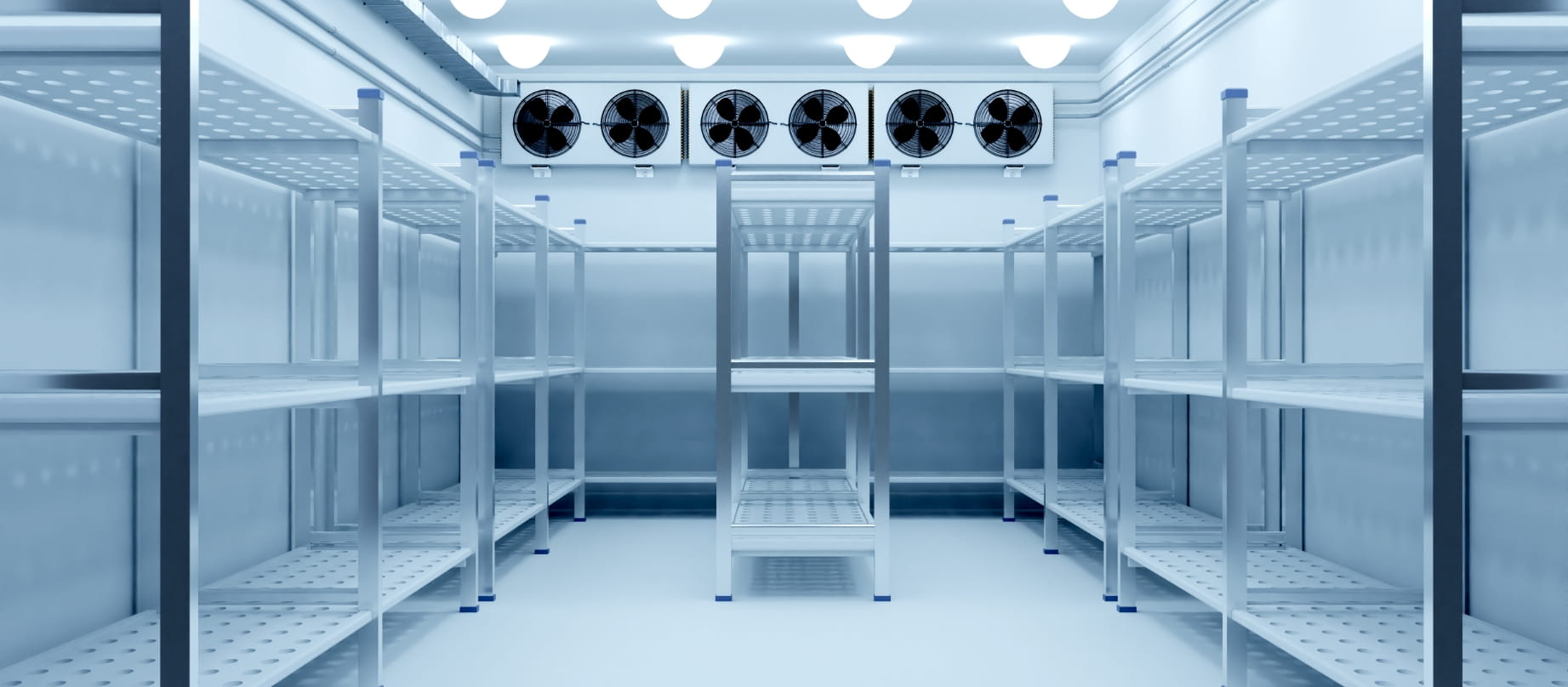
A reliable walk-in freezer cleaner has to do more than remove visible residue. In a sub-zero environment, the wrong product or the wrong process can create new ice, increase slip hazards, slow down crews, and force a freezer area offline longer than necessary.
That is why freezer cleaning should be treated as its own operating procedure—not as a colder version of routine floor care. IRC’s freezer-care line is built around chemistry that performs in extreme cold, with products such as Inferno and Inferno Plus designed specifically for below-freezing cleaning.
This guide explains how to clean a walk-in freezer without adding unnecessary downtime, how to reduce the risk of refreezing during the job, and when it makes sense to involve IRC for an On-Site Demo tailored to your facility.
Cold changes how soils behave and how chemistry performs. In a freezer, moisture can re-freeze before a crew finishes the job. Residue that would rinse away in a normal room may stay bonded to the surface. Product that sprays and spreads well at ambient temperatures may become harder to apply, harder to rinse, or less effective when temperatures plunge.
The environment also changes the labor side of the task. Freezer work usually happens in shorter windows, often around production, shipping, replenishment, or sanitation schedules. Every extra pass, every unnecessary rinse step, and every delay in getting chemicals or tools to the work zone stretches downtime and increases disruption.
Even facilities with strong daily habits can see recurring freezer contamination. The most common trouble spots are usually tied to traffic, door openings, and transition areas where warmer air meets colder surfaces.
The more mixed the soil load becomes, the more important product choice becomes. A cleaner that only attacks one problem well—such as light film—may struggle when the actual condition includes ice, greasy residue, and heavy traffic marks at the same time.
Many floor-cleaning products were not built for sub-zero use. Even if they clean well in normal conditions, they can become inefficient in a freezer because the chemistry, spray pattern, or rinsability no longer behaves the same way. In practical terms, crews often see slower soil release, uneven coverage, or more refreezing during cleanup.
That is the reason IRC positions its freezer-care program separately from general floor care. The company’s Industrial Freezer Care page emphasizes cleaners designed for extreme cold, with the goal of preventing buildup, maintaining sanitation, and reducing downtime. For facilities operating in true sub-zero conditions, that distinction matters.
The fastest freezer clean is the one that is staged correctly. Before the first spray hits the floor, define the area, limit traffic, gather PPE, and line up the tools needed to finish the work in one sequence. Walking in and out for forgotten tools wastes time and increases temperature fluctuation around the work zone.
Where drums or bulk product are used, the right delivery equipment also matters. IRC’s Electric Drum Pump – Armor Blue TED 1 is positioned as a practical option for low-volume shops and facilities that want an alternative to manual pumping.
Before applying a walk-in freezer cleaner, remove loose debris and obvious obstructions. Dry pickup, scraping, or controlled manual removal will make the chemistry work faster because it can get to the bonded residue underneath rather than being wasted on loose material.
This is also the point where teams should identify any heavier ice formations or highly compacted traffic areas. IRC notes that both Inferno and Inferno Plus help melt existing ice formations, which is useful when buildup is part of the cleaning challenge rather than just a side effect of the environment.
Once the zone is prepped, use a freezer cleaner that is actually designed for below-freezing performance. IRC’s freezer line gives two strong options depending on the environment and the severity of the cold.
In practical terms, that means the chemistry is built for the environment instead of fighting it. The goal is not to flood the freezer with product. The goal is to apply enough chemistry, in a controlled way, to break soil free without adding unnecessary moisture and delay.
Once product is applied, mechanical action does the rest of the work. Light contamination may only require focused agitation in door lanes and traffic paths. Heavier soil loads usually require a more deliberate top-to-bottom pattern so loosened residue does not get dragged back across finished areas.
For most freezer rooms, crews get the best result by working in sections. Clean one zone completely, recover residue, and then move to the next. This keeps refreezing manageable and makes it easier to judge whether additional chemistry is needed before the entire room is opened back up.
In a freezer, the cleanup phase is where many teams lose control of the job. Too much rinse water, too much dwell time, or too much back-and-forth foot traffic can turn a productive cleaning step into a new slip hazard. The process should prioritize fast residue recovery and minimal leftover moisture.
That does not mean skipping the recovery step. It means designing it so floors, thresholds, and travel paths do not stay wet any longer than necessary. A controlled application method, limited work zone, and clear exit path all reduce the chance of new ice forming.
Downtime usually expands for predictable reasons. Crews start without staging, use products not built for the temperature, over-apply solution, or clean too much at once. A better SOP reduces labor hours even before product savings are counted.
IRC’s broader site messaging consistently emphasizes super-concentrated solutions, less waste, and lower operating cost. In freezer care, those benefits matter most when paired with a process that reduces repeat cleaning and shortens the time between shutdown and restart.
If your team is trying to standardize freezer cleaning, IRC’s product structure makes it easier to create a small, purposeful toolkit rather than a shelf full of overlapping chemistry.
The most common mistake is treating freezer cleaning like ordinary floor cleaning. That usually leads to over-application, slower recovery, more refreezing, and longer downtime.
Not always. A product can be excellent at ambient temperatures and still be the wrong fit for sub-zero environments. Freezer rooms need chemistry that performs in below-freezing conditions and supports fast residue removal.
That depends on traffic, product type, door activity, and how much residue migrates in from adjacent spaces. Many facilities benefit from a mix of daily touch-up cleaning and scheduled deeper maintenance on problem zones.
Inferno, Inferno Plus, and the related freezer-care accessories on IRC’s Industrial Freezer Care product pages are the most directly relevant starting points.
A strong walk-in freezer cleaner program is really a process decision as much as a product decision. When the chemistry is built for sub-zero use, the work is staged correctly, and residue is recovered quickly, teams can clean thoroughly without creating a second problem in the form of ice, delays, or unsafe travel paths.
If your facility is dealing with chronic ice buildup, recurring residue, or freezer-cleaning routines that take too long, IRC can help you pressure-test the process and recommend a tighter, safer program built around your actual environment.